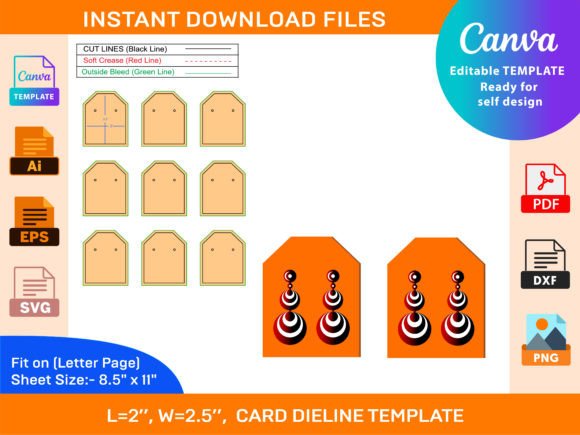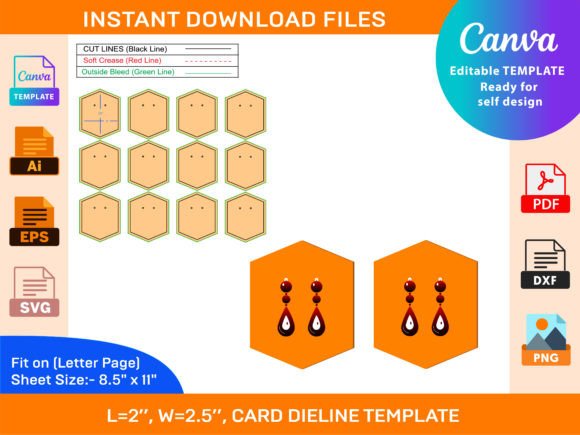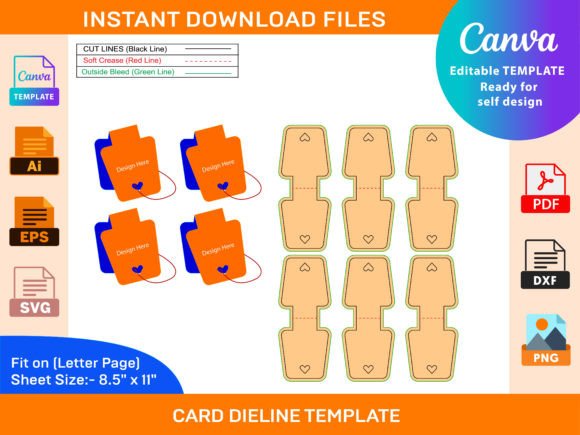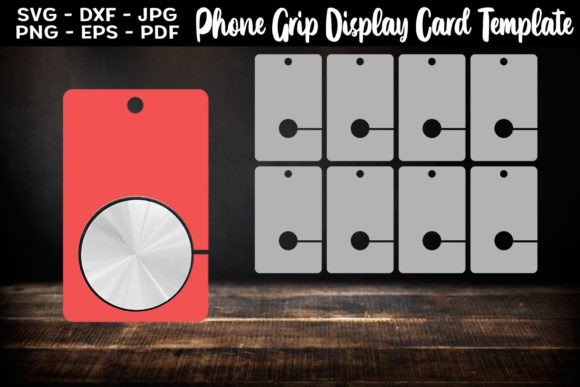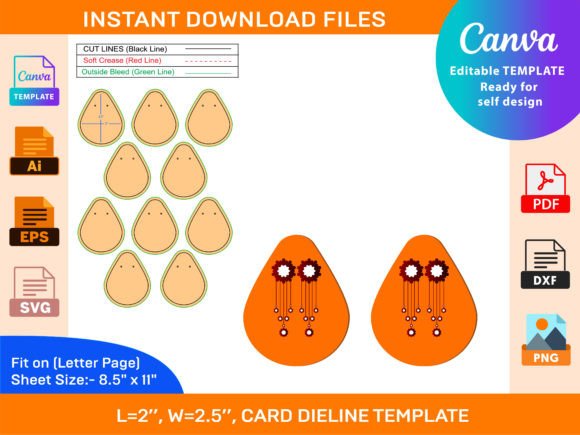
Earring Display Card, Dieline Template for Graphics and Print Templates
When I first opened the Earring Display Card, Dieline Template, my immediate reaction was one of curiosity mixed with professional skepticism. As a brand designer who has spent years refining identities for local boutiques and handmade sellers, I know that the difference between a generic product and a memorable brand often lies in the smallest details. This asset is not just a digital file; it is a foundational piece of a larger strategy. The mood it creates depends entirely on how you choose to style it, but its blank canvas nature suggests potential for anything from rustic charm to high-end elegance. It feels like a tool waiting for a story to be told.
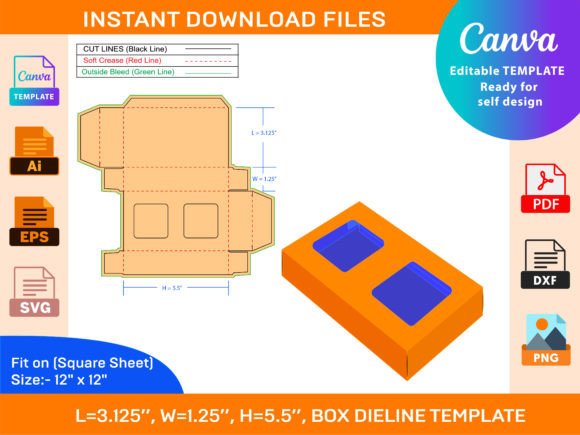
If you are looking a product box packaging, it will be glad to be part of the project. It is blank template perfect for creating your own personalized box packaging. The following packaging dieline te structure provides the necessary framework for a cohesive look. In my experience reviewing such Print Templates, the true value lies in their versatility. This Earring Display Card, Dieline Template does not scream a specific personality; instead, it whispers opportunity. Whether you are launching a line of artisanal soaps or curating a collection of vintage-inspired jewelry, this asset can adapt to fit the visual language of your small business branding.
From Blank Canvas to Brand Identity
The first step in evaluating any graphic design asset is understanding where it fits within the broader ecosystem of a brand. For a local bakery owner, this template could serve as the base for a premium cookie box insert. For a skincare entrepreneur, it might become the backing card for a sample serum vial. The clean lines and defined spaces allow for a strong visual hierarchy, ensuring that your logo and key messaging take center stage without fighting against cluttered graphics.
I recently tested this template for a fictional candle brand called "Lumina." By layering warm, earthy tones over the dieline, we transformed a simple cardboard cutout into a tactile experience. The result was a product presentation that felt organic and handcrafted. This approach works equally well for handmade businesses selling seasonal goods. When customers hold a package that feels designed with intention, they perceive higher value. The Earring Display Card, Dieline Template supports this by offering a structured layout that guides the eye naturally across the page.
However, not every aesthetic fits every brand. If you are aiming for a very strict, minimalist luxury feel, you must be careful not to let the structural elements overpower the simplicity of your design. Conversely, if your brand is playful and bold, this template offers enough room to experiment with vibrant colors and dynamic typography. The key is to treat this Graphics file as a partner in your design process, not just a static background.
Real-World Applications for Local Sellers
The utility of this asset extends far beyond a single product label. In my portfolio, I have seen similar dielines repurposed for a variety of marketing visuals. Imagine using the same vector structure to create a thank-you card that tucks inside a gift bag. Or perhaps adapting the layout for a social media graphic that showcases your product mockups on Instagram stories. The consistency created by using the same underlying design logic across different touchpoints builds a stronger brand identity.
- Packaging Design: Use the template to create custom hang tags, window boxes, or inner liners that elevate unboxing experiences.
- Promotional Materials: Adapt the layout for flyers, price lists, or menu graphics that need to match your product packaging.
- Social Media Content: Create static posts or story templates that feature your products in a branded context.
- Web Design Elements: Incorporate the shapes or patterns derived from the dieline into website banners or email headers.
For a florist, this could mean designing a tag that holds the stems together while displaying care instructions. For a food business, it might be the label on a jar of homemade jam. The Earring Display Card, Dieline Template proves that good design is about solving problems efficiently. It allows you to maintain a professional standard without starting from scratch every time you launch a new product line.
Strategic Considerations and Design Pitfalls
While this asset is powerful, it requires thoughtful application. There are scenarios where a heavy-handed use of decorative elements can detract from the core message. For instance, if you are designing a label for a supplement or a food item with extensive ingredient lists, do not let the decorative borders compete with the legal information. Clarity is paramount in these cases. The visual hierarchy must prioritize readability over aesthetics when safety and compliance are involved.
Furthermore, be cautious when using this template for formal corporate branding. While it can work for creative agencies or lifestyle brands, it may lack the rigid structure required for traditional financial or legal entities. Similarly, if you plan to use this on very small labels, ensure that the resolution remains sharp. A blurry edge on a tiny sticker can ruin the perception of quality. Always test your designs at 100% scale before sending them to print.
Another critical factor is color contrast. A design that looks stunning on a white screen might disappear when printed on dark kraft paper. I recommend previewing your work on various backgrounds to ensure legibility. If you are using a script font for your logo, make sure it pairs well with the structural lines of the template. Sometimes, a sans-serif font provides a better modern contrast, while a serif font might add a touch of classic elegance.
Practical Designer Notes for Implementation
Before you commit this asset to your next client project or personal brand launch, there are several technical checks you should perform. First, verify the commercial license. Just because a file is available on a creative marketplace does not automatically grant you the right to sell physical products featuring it. Ensure you have the proper permissions for commercial design use.
Next, inspect the file format. If you are working with an SVG design, check the vector editability. Can you easily adjust the stroke widths? Are the paths closed properly for printing? If you are using a PNG design, check the transparency edges. Fuzzy white halos around your graphics can look unprofessional on a printed card. Always compare your final output with competitor packaging to see how your design stands out on the shelf.
Testing is non-negotiable. Print a few samples in black and white to check the tonal balance. Then, test it with your actual brand colors. Does the red pop, or does it bleed? Does the blue look too dark? I also suggest testing the template beside different font styles. Try it with a handwritten font to see if it captures that "personal touch," or pair it with a display font for a bold statement. These small adjustments can make the difference between a generic template and a bespoke brand element.
Finally, consider the end-user experience. How does the customer interact with this packaging? Is it easy to open? Does the card protect the product during shipping? The Earring Display Card, Dieline Template is more than just a visual aid; it is a functional component of your product. By treating it with the same rigor as your logo or website, you ensure that every interaction reinforces your brand's promise of quality.
In conclusion, this asset is a valuable addition to the toolkit of any creative entrepreneur. Whether you are a social media manager looking to create consistent content or a packaging designer seeking a reliable base for client work, this template offers flexibility and professionalism. It bridges the gap between digital creativity and physical reality, allowing you to present your local business with confidence and style.