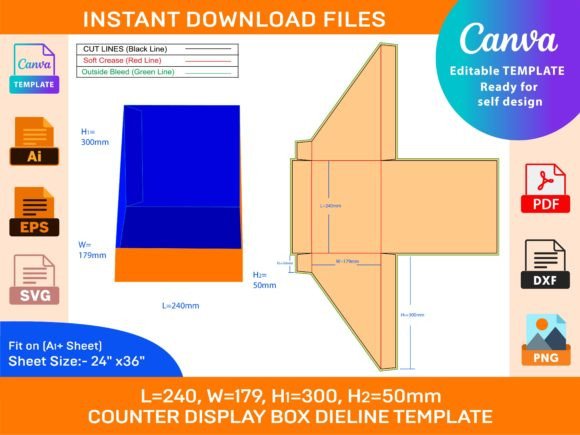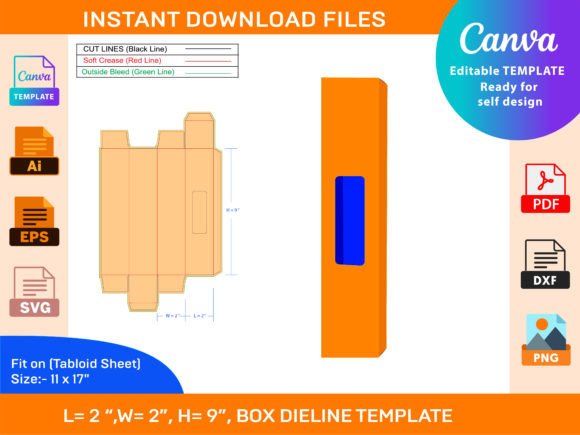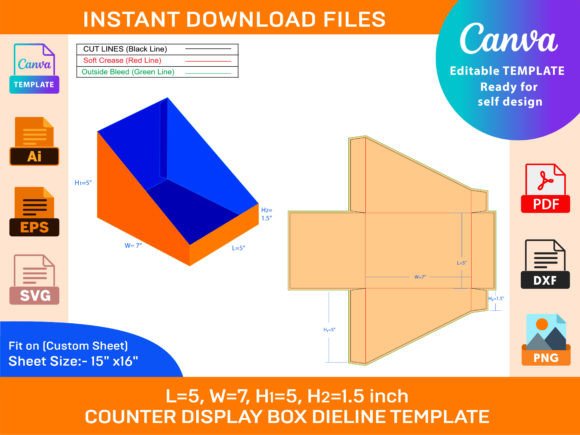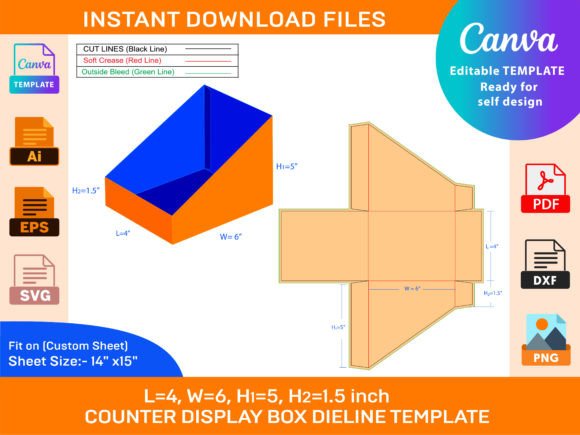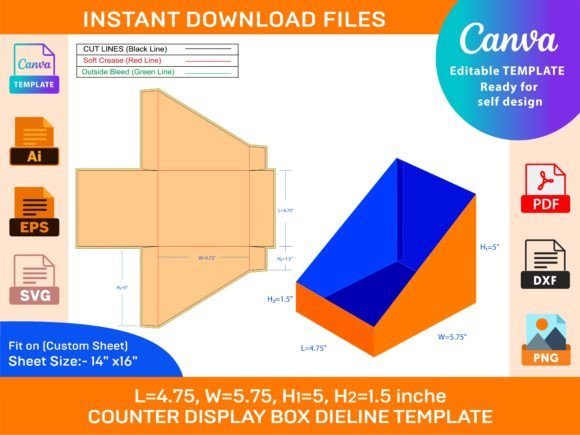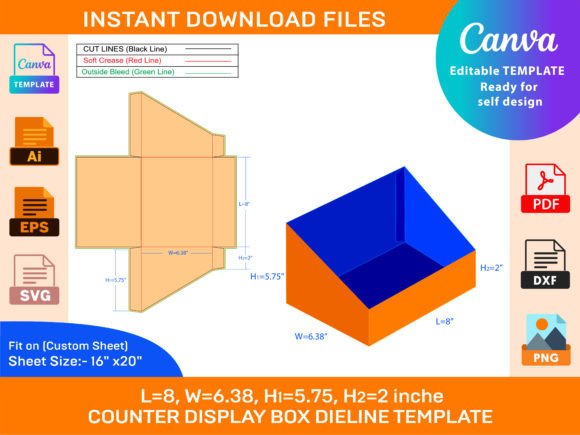
Phone Cases Counter Display Box Dieline Review
As someone who has spent years turning digital files into tangible, stitched treasures, I approach every new asset with a mix of excitement and skepticism. When I first encountered the Phone Cases Counter Display Box Dieline, my initial reaction wasn't about embroidery machines or needles. Instead, I was immediately drawn to its potential as a packaging solution for finished goods. However, in the world of handmade commerce, presentation is just as critical as the stitching itself. This review explores how this specific design from the Print Templates category fits into a real-world workflow, particularly when you are trying to elevate your brand presence through thoughtful packaging.
The First Impression: Packaging Meets Craft
The moment you open the file, the layout strikes me as clean and functional. Unlike many generic templates that feel cluttered or overly decorative, the Phone Cases Counter Display Box Dieline offers a structured framework that suggests professionalism. It creates a mood of organized creativity, perfect for a boutique owner who wants their products to look curated rather than mass-produced. The visual personality here is one of utility; it is designed to hold something valuable, whether that is a custom phone case or a small embroidered accessory.
For an embroidery designer, the appeal lies in the blank canvas nature of the template. It allows you to overlay your own branding, stitch counts, or decorative elements without fighting against a pre-existing complex pattern. It feels like the kind of asset that belongs on a workbench alongside spools of thread and stabilizer sheets, waiting to be customized for a specific client order.
Real-World Application: From Stitch to Shelf
To truly understand the value of this design, let's imagine a practical scenario. You have just finished a commission for a local coffee shop owner. They requested a set of custom embroidered aprons featuring a vintage-style floral motif, along with matching tote bags for their baristas. The stitching went perfectly, the colors popped on the cotton twill, and the clients were thrilled. But now comes the final step: presenting these items.
This is where the Phone Cases Counter Display Box Dieline becomes indispensable. While the name suggests phone cases, the structural logic applies beautifully to flat-pack packaging for smaller textile goods. You can print this dieline, cut it out, and fold it to create a sturdy counter display box. Inside, you place the folded apron or the rolled tote bag. Suddenly, what started as a simple piece of fabric transforms into a premium gift experience. The customer doesn't just receive a product; they receive a branded artifact that feels substantial and expensive.
I have seen Etsy sellers struggle with shipping costs and damaged goods because their packaging was flimsy. Using a robust dieline like this ensures your embroidery project arrives in pristine condition. Whether you are selling holiday gifts, wedding favors, or personalized baby items, having a dedicated box that matches your aesthetic builds trust. It signals that you care about the entire journey of the product, not just the machine time it took to make it.
Where Caution is Required
While the design is versatile, there are specific situations where you must exercise caution. If you are planning to use this dieline for very small hoop sizes or intricate details, remember that the structural integrity of the box relies on clean lines and precise folds. If your branding involves tiny lettering or highly detailed graphics, ensure they remain legible once printed and scaled down to fit the box panels.
Furthermore, consider the fabric texture if you intend to incorporate any fabric samples directly onto the packaging. Thick fabrics like heavy denim or plush fleece might not sit flat inside a standard counter display box, potentially causing the lid to pop open or the structure to bulge awkwardly. Similarly, if you are working with stretchy fabrics or dark materials, the contrast between the product and the interior of the box matters. A light-colored box interior might show dirt easily, while a dark box could hide stains but make the product harder to see at a glance.
For commercial embroidery projects involving layered garments or curved surfaces like caps, the box needs to accommodate the bulk. A dieline designed for thin items might crush a thick sweatshirt or a puffy hat. Always test the physical dimensions against your actual finished product before committing to a large print run.
Elevating Visual Appeal and Brand Consistency
The impact of good packaging on perceived value cannot be overstated. When a customer unboxes a product wrapped in a well-designed container, their perception of the quality of the stitch density and thread colors often improves. It frames the work as a luxury item rather than a craft hobbyist's side hustle. The Phone Cases Counter Display Box Dieline supports this by providing a neutral yet professional stage for your creations.
In a crowded market like Etsy or craft fairs, recognition is key. If you consistently use this dieline across different product lines—perhaps adding a sticker of your logo to the flap—you create a cohesive brand identity. Customers begin to associate the shape of the box with your craftsmanship. This consistency fosters repeat business and encourages word-of-mouth recommendations. It turns a one-time buyer into a loyal advocate who expects the same high level of presentation every time they order.
Practical Notes for the Designer
Before you head to the printer or start assembling boxes, there are several technical steps you should take to ensure success. First, always test the design on scrap material or a low-cost print run to check the scale. Does the text read clearly? Do the fold lines align correctly? If you plan to add your own machine embroidery design elements to the box surface, verify that the resolution is sufficient for printing without pixelation.
Review the stitch density and file formats of any additional assets you intend to combine with this dieline. Ensure that the hoop size of your embroidery machine matches the intended placement area if you are embroidering directly onto the box inserts. If you are using the box as a mockup for digital previews, confirm that the aspect ratio works for your website listings.
Don't forget to inspect the licensing terms. Many graphics and digital product sellers have strict rules about reselling finished items made from their templates. Confirm whether you can sell products packaged in this box or if the license is restricted to personal use only. Using the wrong file for commercial purposes can lead to legal issues down the line.
Finally, compare your design in both black and white and full color. Sometimes a beautiful layout loses its impact when printed on specific paper stocks. Test it under different lighting conditions to ensure the colors remain vibrant. By taking these precautions, you protect your reputation and ensure that the Phone Cases Counter Display Box Dieline serves as a reliable foundation for your creative business.
Ultimately, this tool is more than just a template; it is a bridge between your needlework and your customer's satisfaction. It proves that even in the age of digital downloads, the tactile experience of opening a package remains a powerful part of the buying process. For any serious maker looking to refine their craft business operations, investing time in understanding and utilizing such resources is a smart move.