Ship Wheel Mandala Drawing 135 Review
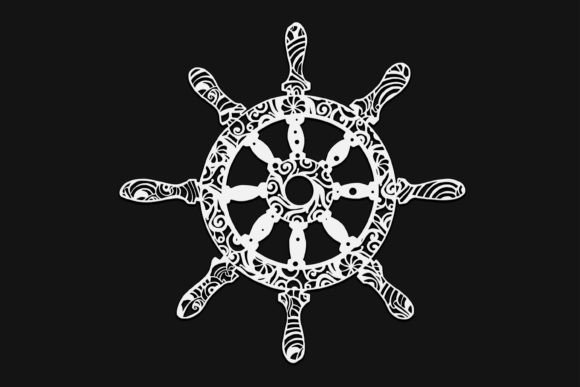
As a designer who spends half my life staring at stitch density charts and the other half worrying about how a finished product will look on a customer’s shoulder, I don’t just buy embroidery files—I vet them. When I first pulled up Ship Wheel Mandala Drawing 135, I wasn’t looking for a quick fix; I was looking for a centerpiece. This design sits right at the intersection of nautical heritage and intricate geometric artistry, which is a tricky balance to strike in digital form. My goal here is to tell you whether this piece holds up when it moves from your screen to your hoop, and more importantly, whether it holds up in the hands of a paying customer.
First Impressions: Mood and Visual Personality
The moment you open the file, the mood is distinct. It isn’t just a logo; it’s an illustration with weight. The mandala structure provides a natural symmetry that feels calming yet authoritative, while the ship wheel motif anchors it in tradition. For those of us in the craft business, visual personality is everything. A generic anchor is fine for a beginner, but a detailed mandala wheel suggests craftsmanship. It tells the buyer, “This item was made with care.”
The layout is circular, which immediately dictates where it can live. It demands space. In terms of aesthetic appeal, it bridges two very popular markets: the rustic farmhouse aesthetic and the modern coastal chic style. It works equally well on a distressed denim jacket as it does on a crisp white tea towel. That versatility is its strongest selling point. It doesn’t scream for attention like a bright neon graphic; instead, it invites the eye to trace the details, which increases the perceived value of the finished product.
Real-World Application: Where This Design Shines
I tested the concept of this design across several common small business merchandise categories. Here is where Ship Wheel Mandala Drawing 135 truly excels:
- Custom Apparel and Sweatshirts: On a heavyweight cotton sweatshirt, this design acts as a statement piece. Whether placed centered on the back or slightly off-center on the chest, the mandala shape breaks up the fabric’s expanse without overwhelming it. It adds texture and depth that makes a basic garment feel like boutique wear.
- Tote Bags and Canvas Totes: This is perhaps the most natural home for the design. The sturdy canvas fabric supports the detail level of a mandala beautifully. For an Etsy seller, a tote bag featuring this embroidery instantly looks premium. It appeals to readers, artists, and anyone who appreciates a touch of maritime flair in their daily carry.
- Kitchen Linens and Aprons: I envision this looking stunning on a flour-sack towel or a heavy-duty apron. The circular nature of the mandala fits perfectly within the square frame of a folded towel. It transforms a utilitarian object into a decorative accent, making it a highly giftable item for housewarmings or holidays.
- Patches and Badges: Because the design has a clear central focal point (the wheel) radiating outward, it lends itself well to being bordered as an embroidered patch. This opens up revenue streams for hat brands, backpack customization shops, and uniform suppliers.
The key takeaway here is brand consistency. If you are building a handmade brand around themes of travel, navigation, or steady craftsmanship, this design reinforces that narrative. It signals reliability and skill, which builds customer trust before they even touch the product.
Technical Considerations and Stitch Performance
No matter how beautiful a vector looks on a monitor, embroidery is a physical medium. Here is what you need to consider regarding stitch density, thread colors, and fabric interaction.
Detail vs. Hoop Size: The mandala elements can get quite fine. If you are working in a smaller hoop size, you risk losing the delicate inner rings of the design. The machine may struggle to render tiny curves if the stitch length isn’t optimized. Always check the scaling. If the design becomes too small, the individual stitches merge, and the mandala loses its definition, turning into a blurry blob rather than a crisp pattern.
Fabric Texture and Stability: This design requires a stable foundation. On stretchy fabrics like thin jersey or lightweight polyester blends, the tension of the fill stitches and satin edges might cause puckering. You must use the proper stabilizer—likely a cut-away for garments that will be washed frequently, or a tear-away for non-stretch items like pillow covers. On textured fabrics like boucle wool or rough burlap, the fine details of the mandala might get lost in the weave. Stick to smooth-to-medium textures for the best clarity.
Thread Color Strategy: The design is provided as a solid black base, which is great for planning. However, you cannot simply assume white thread on blue denim is enough. To make the mandala pop, consider using variegated threads for the outer rings and a solid, contrasting color for the central wheel. Or, go monochromatic with different shades of navy or grey to create a subtle, tonal luxury effect. Avoid overly busy thread combinations that compete with the intricate lines of the drawing.
Where to Use With Caution
Not every surface is a good fit. I would advise against placing this design on curved surfaces like baseball caps unless you have significant digitizing experience to adjust the curvature. The rigid symmetry of a mandala can look distorted if not properly warped during the digitizing process. Similarly, avoid using this on dark fabrics without a substantial underlay or backing, as the contrast may be poor unless you use metallic or high-contrast threads.
Also, be mindful of products that undergo frequent, harsh washing. If the stitch density is too high in certain areas, repeated laundering can cause the fabric to pucker around the embroidery. For commercial embroidery projects intended for long-term wear, always inspect the small details after the first wash test.
Practical Designer Notes for Execution
Before you rush this into production for your shop, follow these steps to ensure professionalism:
- Test on Scrap Fabric: Never run a full production batch without stitching a sample first. Check how the thread behaves and if the fabric distorts.
- Review in Black and White: Convert your mockup to grayscale. Does the design still read clearly? This helps identify if the contrast between stitch types is sufficient.
- Check Licensing: Since this is sold as a digital embroidery file, confirm the license terms carefully. Are you allowed to sell the finished physical goods? Can you offer this as a printable mockup service? Clarity here protects your small business from legal issues.
- Inspect Small Details: Zoom in on the SVG preview. Are there any overlapping paths that might cause the machine to take unnecessary jumps? Cleaning up minor artifacts before digitizing saves time and thread.
- Compare Backgrounds: Test the design on both light and dark backgrounds in your mockup software. Ensure it translates well visually before listing it online.
Final Verdict
Ship Wheel Mandala Drawing 135 is a robust, versatile asset for any serious embroiderer. It is not a novelty clip-art piece; it is a structural design that rewards careful execution. For the hobbyist, it offers a satisfying challenge that results in a beautiful personalized gift. For the Etsy seller or craft business owner, it provides a high-value aesthetic that can elevate simple products like tote bags and aprons into desirable boutique items.
It fits seamlessly into the world of custom apparel, holiday embroidery, and commercial embroidery alike. As long as you respect the technical requirements—proper stabilizers, appropriate hoop sizes, and thoughtful thread choices—this design will perform reliably. It is a smart addition to your library of design assets, offering both artistic merit and commercial potential.